Why Do Brick and Stone Surfaces Deteriorate?
Brick and stone faces can deteriorate through salt crystallisation, freezing of absorbed water, chemical attack or expansion of embedded materials or metal. Start by distinguishing material that has been deposited from material that has broken away. Then relate the pattern to moisture, exposure and construction. Losing the outer face of a unit is not the same finding as a wall losing restraint, although both can occur together.
Check whether the visible change follows courses, joints, isolated units, a support line or an exposed strip. A dusty or white surface can be deposit on intact masonry, while a clean-looking surface may have lost its fired skin or a thin layer of stone. Note offset, bulging or mortar loss separately. Those observations matter to the condition of the wall even where the first question concerns water or appearance.
Are salts on the face or crystallising within it?
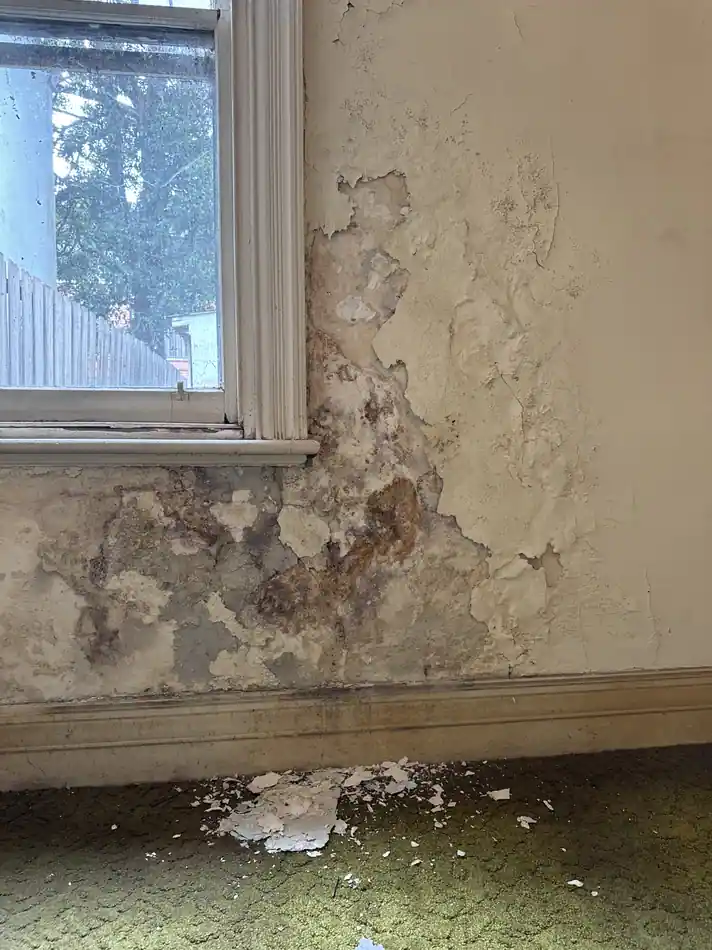
Efflorescence is a deposit left on the surface when water carrying dissolved salts evaporates. Salt crystals growing inside the pores can instead push the surrounding material apart. Water freezing in saturated material can also cause crumbling or flaking. Look for fresh broken material, changes in texture or a receding face to distinguish actual loss from a deposit. A white mark alone does not establish either damage mechanism.
For stone, the orientation of its bedding, the pore structure and the route by which water and dissolved material reach it affect the pattern. A patch receiving runoff from a coping can behave differently from the same stone elsewhere. A wet, dark or colonised area may identify a sheltered or persistently damp location without indicating how much stone has deteriorated. Surface cleaning is not an investigation of the depth or source of damage.
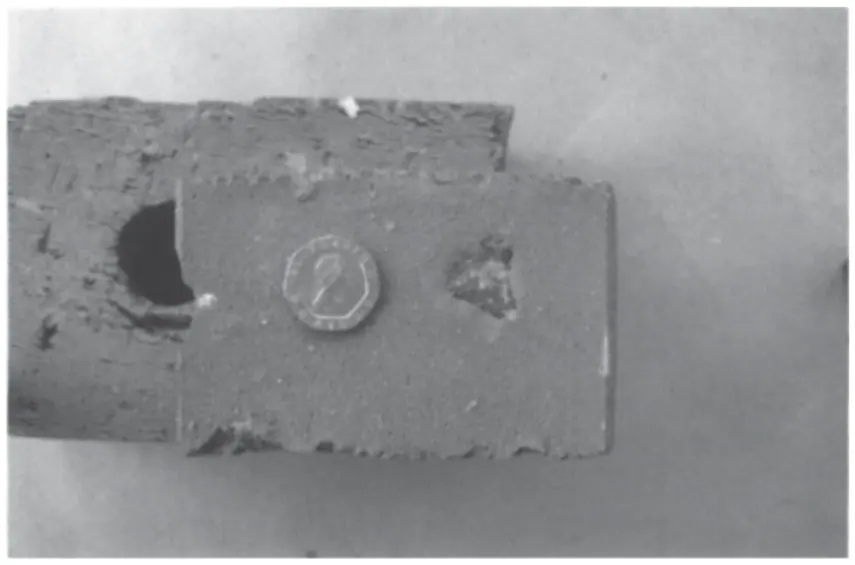
An isolated pop-out can have a different cause
The pop-out in Figure 2 is limeblowing. A shell inclusion was converted to quicklime during firing, then absorbed moisture and expanded until it broke the adjacent brick face. This local rupture started within the brick, not from an impact or movement of the whole wall.
Compare a few isolated pop-outs in individual units with material loss across several adjoining bricks or around a common joint. A concentration in bricks from one installation or batch can be a useful observation without confirming composition. A displaced course or recurring crack through both brick and mortar changes the question. Do not chip off material for identification; record the shape and distribution that an assessor can compare with other evidence.
Exposure can vary within a single elevation
A sheltered strip below an overhang can collect deposits or support growth that frequent rain washes off farther down the wall. Concentrated runoff can instead erode a narrow strip below a joint or projection. Even durable replacement stone can deteriorate where it receives runoff carrying dissolved minerals from different stone above. Before choosing a treatment, establish where water arrives, how the masonry dries and whether the treatment would change either.
Flaking alone does not establish frost damage. Look for freezing where the material was wet. Repeated freeze-thaw cycles can worsen damage, and a severe freeze can spall a hardened surface. Water absorption alone does not predict frost resistance, especially across different materials. A test may compare similar stones more usefully than unrelated brick and stone. Consider salt activity and incompatible cleaning if either could account for the loss.
Check what the face is attached to
A stone face can conceal a rubble core or cover a frame. A brick pattern may imitate bonded masonry without showing how the leaves truly connect. Those distinctions matter when the face has bowed: weathering on the surface and separation or loss of restraint within a built-up wall have different consequences. Determine which support arrangement the assessor is actually examining.
Corrosion of concealed iron or steel can press against a masonry face, cracking or spalling it. Cavity ties can also weaken as they corrode. A crack following a member can help locate the problem, but expansion may initially fill a hidden gap without cracking the surface. Repointing will not restore lost restraint.
Match the next check to the consequence
If there is local face loss but the units remain aligned, investigate moisture and material compatibility rather than choosing a foundation repair. If a part is bulging, loose or losing bond, include the connected wall and restraint in the assessment rather than limiting work to cleaning or surface patches. Keep clear of falling material and obtain prompt assessment where appropriate.
Identify what would change the repair choice: a source of water, a damaged joint, incompatible replacement material or a concealed structural connection. Removing a deposit below a drip is different from reducing the runoff that replenishes it.
What to distinguish in the condition record
- Deposits, erosion or spalling, open joints and actual displacement at their respective locations.
- What is known about the face, backing and earlier cleaning, coatings or repairs.
- The material or concealed connection that still needs verification before specifying work.