What can salt marks on a concrete ceiling reveal about water entry?
Salt marks on a concrete ceiling show where moisture reached a surface and left dissolved material behind as it evaporated. They can help locate an exit at a slab joint or penetration. They do not identify where water first entered from above, whether it is still entering or whether the slab or nearby services have deteriorated. Use the pattern to direct an investigation of the route, not as a diagnosis of it.
The flat concrete roof slab over a basement or below-ground garage can carry an exposed walkway, planter or lightweight structure while forming the ceiling below. Falls, drainage and waterproofing are meant to manage water above it. Water that gets past those details can appear below at a joint or service opening. A salt line on the underside records where moisture reached the face, not all the layers it passed through.
Compare deposits with slab joints and service openings
Salt deposits can follow slab joints or cluster around services that pass through the concrete. A line at a joint points to a different possible route from a deposit around pipe sleeves. In Figure 1, deposits follow parts of the slab underside near joints and services. That directs attention to the connection between slab, openings and upper layers rather than to a whole ceiling panel.
An underside view cannot show whether the membrane above is continuous, which area collected water or whether a gap is sealed around the full perimeter of a pipe. A planter over or near a mark is a possible supply of moisture, not proof that water came through that planter. The observed exit could be offset from the place water arrives at the slab. Keep plan location and level in view so the assessor can check their relationship rather than relying on a close-up of residue.
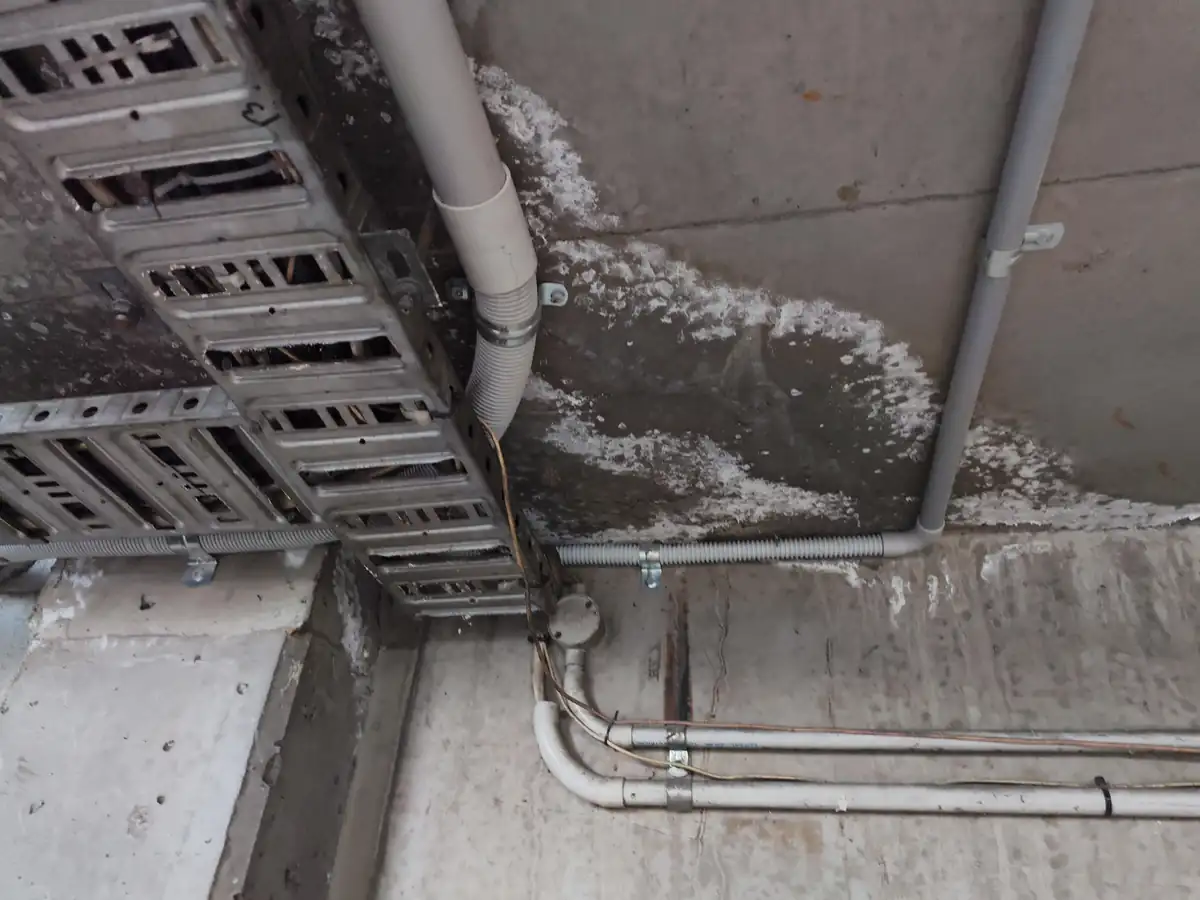
Plot the deposits against the joints and sleeve locations, then compare with what is known above. A line following a joint over several bays asks how the joint closes, drains or remains continuous through the upper detail. A cluster at one opening asks when that opening was formed and how the layers were reinstated around it. Where a joint and a penetration are close together, do not merge them into a single candidate route before there is evidence about which was wet first.
Compare fresh wetting with old dry residue. Dissolved salts can remain after the water route changes or the surface dries. A new wet edge during rain or use of the upper surface gives better timing evidence than a deposit first seen on a dry visit. The amount of residue is not a measure of flow and does not date the start of the leak.
A pipe can itself leak, or water can travel around the outside of a sound pipe through the penetration. If a service was added after the original slab or waterproofing, find out how the opening was formed and what treatment was specified. An opening can be present in a drawing without showing whether the installed seal or waterproofing protects it. If the line is usually dry until the upper area is washed or exposed to rain, that observation raises a water-path question distinct from a leak during operation of the service. Neither proves the route by itself.
Which part of the route would a repair change?
Compare work that reduces water arriving above, work that restores continuity at the joint or penetration, and cleaning below. Cleaning removes the visible residue but does not alter water delivery or the gap it used. Sealing one visible exit may leave the upper route unchanged. The assessment should identify where it can verify the drainage and waterproofing, which opening or joint it suspects and how the evidence could separate that route from a service leak. Do not cut new inspection holes or disturb the service to investigate on your own.
The investigation may find more than one defect. A surface that drains poorly can retain water near a sound slab joint and a poorly sealed sleeve. The presence of standing water is useful source evidence but does not establish which detail failed. Conversely, a damaged sleeve seal does not establish the original water supply if the area above was inaccessible.
Metal services along a wet route can corrode. Record staining, visible metal deterioration and loose concrete separately from salt deposits. A photograph cannot establish the salt chemistry, how much metal is lost or whether the slab and services remain adequate. Keep clear of loose overhead material or leaks by electrical equipment and arrange appropriate assessment. Use the mark to select the route and affected details that need checking.