How Trenches and Changed Drainage Can Affect Ground Moisture
A backfilled trench can change where water travels even if the pipe inside it is sound. If water moves more easily through the fill than through the surrounding soil, the trench can carry it towards another part of the site. If the trench obstructs an existing path, water can collect or go around it. What matters to the house is whether either change reaches the ground that supports the affected part of the building.
How backfill changes the water path
In a trench running through relatively dense ground, more permeable fill can carry water along the trench and release it well away from where it entered. That route can follow the pipe without the pipe carrying or leaking any of that water. Backfill can act as a drain even where no one intended it to.
A less permeable trench can have the opposite effect. It can interrupt flow through a layer that previously passed water, so a wet area develops on one side. Before deciding which explanation fits, establish the direction the water can move and which materials it would encounter. A line on a services plan shows where a pipe was intended to go, not how the ground on either side responds to water.
The outlet matters as much as the route. A trench that collects water from higher ground cannot be assumed to remove it safely. It may discharge to an outlet, end against less permeable ground, or connect with another trench carrying water in a different direction. A dry-looking surface is compatible with water still moving below it. Conversely, surface ponding is not proof that the trench carries water to a footing.
Separate pipe condition, ground conditions and support
Three findings are easy to confuse: a pipe leaking into the ground, water travelling outside an intact pipe, and a trench excavation or its backfill affecting support. A test of an identified pipe section can help with the first finding. It does not establish the permeability of the fill or whether the footing bears on ground disturbed by the excavation. A cross-section through the footing and trench can clarify whether the two are close at the relevant depth, not just close on the plan.
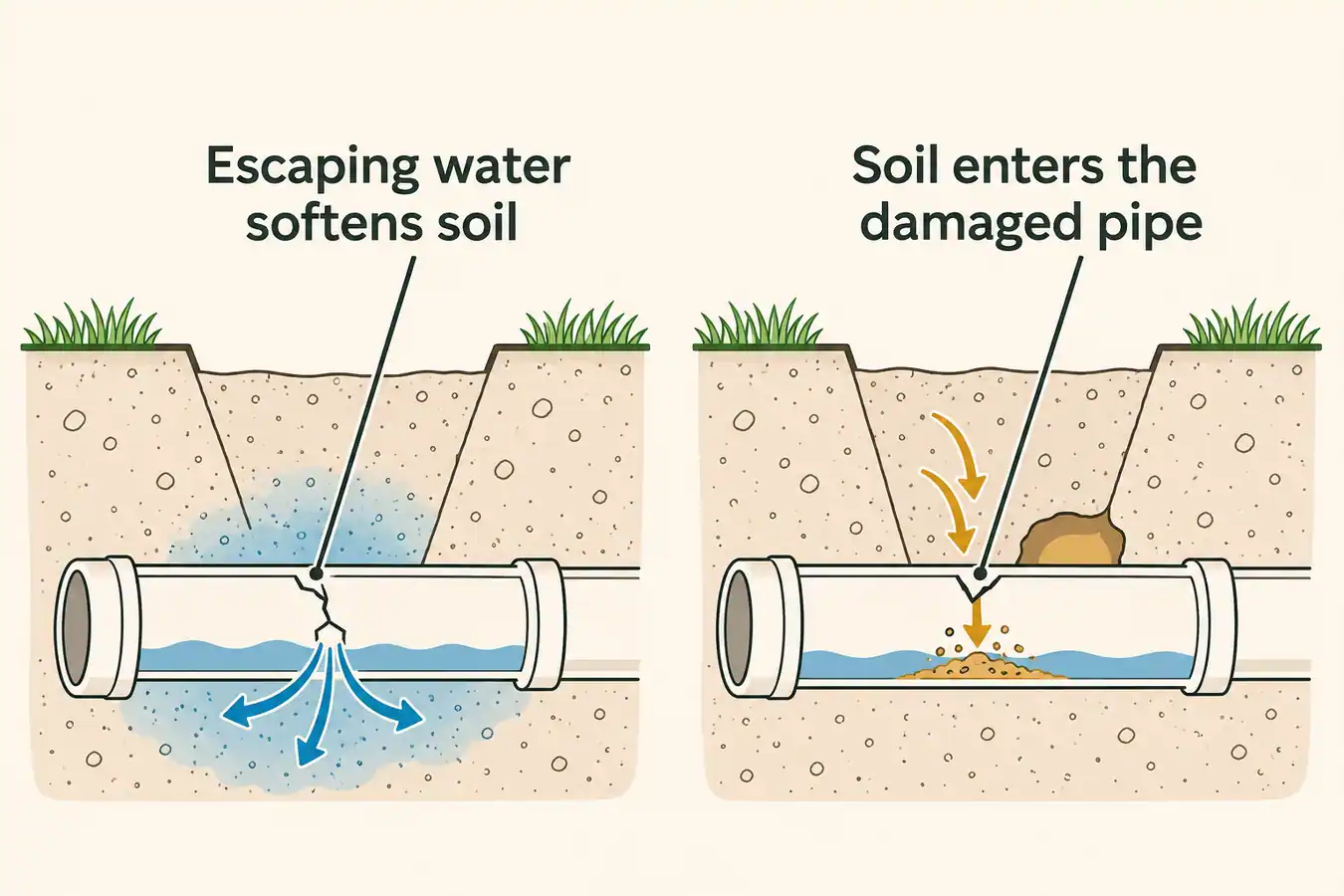
Figure 1 contrasts water leaking from a broken drain and softening the soil with groundwater carrying material into a damaged pipe and leaving a void. Both can leave a support problem after the pipe is repaired. The diagram does not show what happened in a particular trench or locate lost support beneath a wet patch. Leave excavation to specialists who can account for utilities and foundation support.
Test the sequence against the location of damage
Consider a door that begins sticking after a new service connection is installed along the side boundary. The date gives the change an order, but the case still requires a route from the works to the relevant foundation and a building response consistent with that route. If the floor and wall nearest the trench did not move, ask what would account for the change at the door. If the same corner dropped and a wet zone connects it to the trench, that is stronger reason to investigate the link, not proof that the pipe itself leaked.
An earlier clear photograph of the opening can help establish when the distortion appeared; a poorly framed image may not show it at all. An installation photograph can answer a different question, such as whether the trench contained gravel or crossed an older drain. Use each observation for the question it can actually answer. Do not infer a buried connection from a single photograph of completed landscaping.
What the intervention must change
Specify the objective before changing drainage. A leaking joint calls for stopping escape from that section; an intercepting trench calls for controlling where the intercepted water goes. If the bearing material has softened or been carried away, stopping the flow does not restore support. Even excavation for a beam-and-base repair can create a new path through backfill to the base of the support. Account for that path in the design rather than choosing an underpinning system from the drainage finding alone.
Ask what would show that the selected intervention achieved its purpose. A pipe test, a check on where water discharges and comparable building levels give different answers. The drainage contractor and engineer may need to coordinate them so fixing one fault does not create another route. Where the ground or structure appears unstable, arrange urgent assessment rather than waiting for a change in the weather.
What evidence helps test the drainage explanation?
- Plot confirmed trench routes and outlets against foundations and affected areas.
- Retain information showing when and how the works were installed.
- Distinguish interception or diversion of groundwater from water escaping a failed drain.
- Ask how the proposed water path relates to the actual ground and foundation conditions.