Is Moisture on a Window Different From Moisture Between the Panes?
Yes. Moisture on an accessible window face describes the conditions at that surface. Misting inside the cavity of a sealed double-glazed unit raises a different question about the unit. First confirm which surface is affected and which glazing system you have. A damp frame, a fogged pane and water running in from outside can look similar in a photograph without having the same cause.
Which surface is wet?
Moist air can condense where it meets a surface cold enough for water to collect. The glass, perimeter and frame may not be at the same temperature, so a wet edge and a clearer centre can still be part of one room-side condensation pattern. An outside face can also be wet under its own conditions. Seeing water from indoors does not mean that the water is on the room face or that the window leaks during rain.
Where it is safe to reach the glass from inside, observe whether the mark is on the accessible surface or seems to remain behind it. Do not reach outside or dismantle anything. Note how far the wetting extends into the frame or reveal. If there is water at the sill but not on the pane when you look, its presence does not identify the route; it could have run down after forming above or entered at a nearby detail.
Secondary glazing and sealed units are not the same
Secondary glazing adds a separate layer to an existing window and need not create a factory-sealed cavity. The room-facing pane can become warmer while the original glass beyond it becomes cooler. If moisture forms in that space, assess how air reaches it and which glass surface is wet. Do not report a failed seal in a manufactured unit unless that is the system actually present.
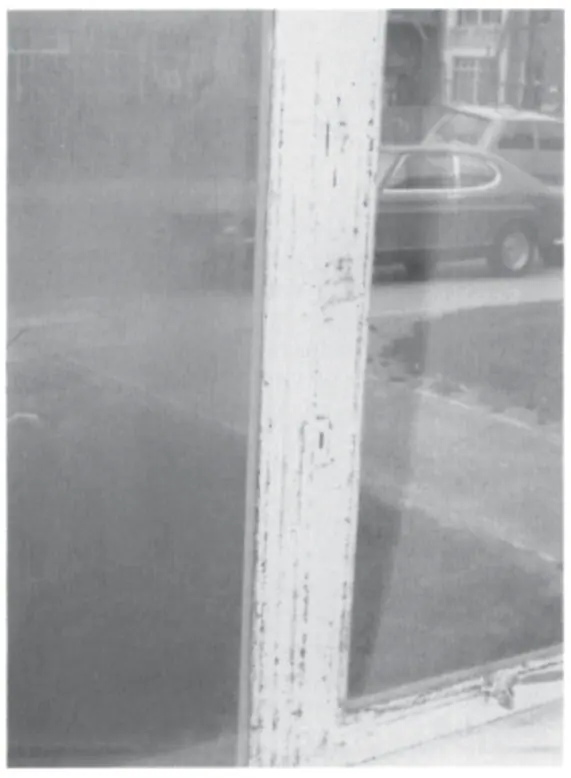
In the documented case in Figure 1, defective seals in stepped double-glazed units admitted warm, humid room air. It condensed on the cold inner face of the outer pane. Other marks can look similar. Confirm whether the moisture is inside the unit or on an accessible face and identify which system was installed.
Installation or repair records can identify whether the original window was retained, the sealed unit replaced or the sash changed. Each operation may leave a different junction untouched. If the visible mark returned after work, establish which part the work was meant to correct. A replaced sash adjustment and a replaced glass unit are not the same intervention, and an invoice for sealant may not specify which of several seals it addressed.
Can the frame or hardware affect the glazing?
Glass, frame, bedding and hardware play different roles. Frame distortion or corrosion can change how the glazing bears or closes at the corners. A sash that no longer closes correctly raises a fit or operation question, not proof that the sealed cavity has failed. Compare the moisture position with joints and weather-exposed edges. A changing sash gap can direct inspection without establishing a hidden water path.
Treat overhead glazing separately. A rooflight has different exposure, drainage and support from a wall window, and loose or cracked overhead glass poses a risk of falling. Do not apply a wall-window repair to a rooflight because both happen to have two panes.
Distinguish repeated condensation from an event-related entry path
Consider two reports of a wet window. One records moisture across a cool room-side pane at the same time as high indoor moisture; the other records a recurring wet patch to one corner during driven rain, where the exposed face of the glass is dry. Each points to a different path to investigate, not a conclusive diagnosis. Conditions can occur together, and a mark after the event may not show where the water began. The useful comparison is which surface became wet first and where that observation sits in relation to the glazing and frame.
Leave concealed edges and inaccessible faces to the specialist. Do not remove beads or open a glazing unit to find the moisture. Keep clear of loose or damaged glass and obtain urgent advice where it could fall. For a normal investigation, identify the glazed system, the actual wet face and the weather or room conditions at the time. That narrows the enquiry more than asking for all seals to be replaced.