When a Porch and a House Have Different Foundations
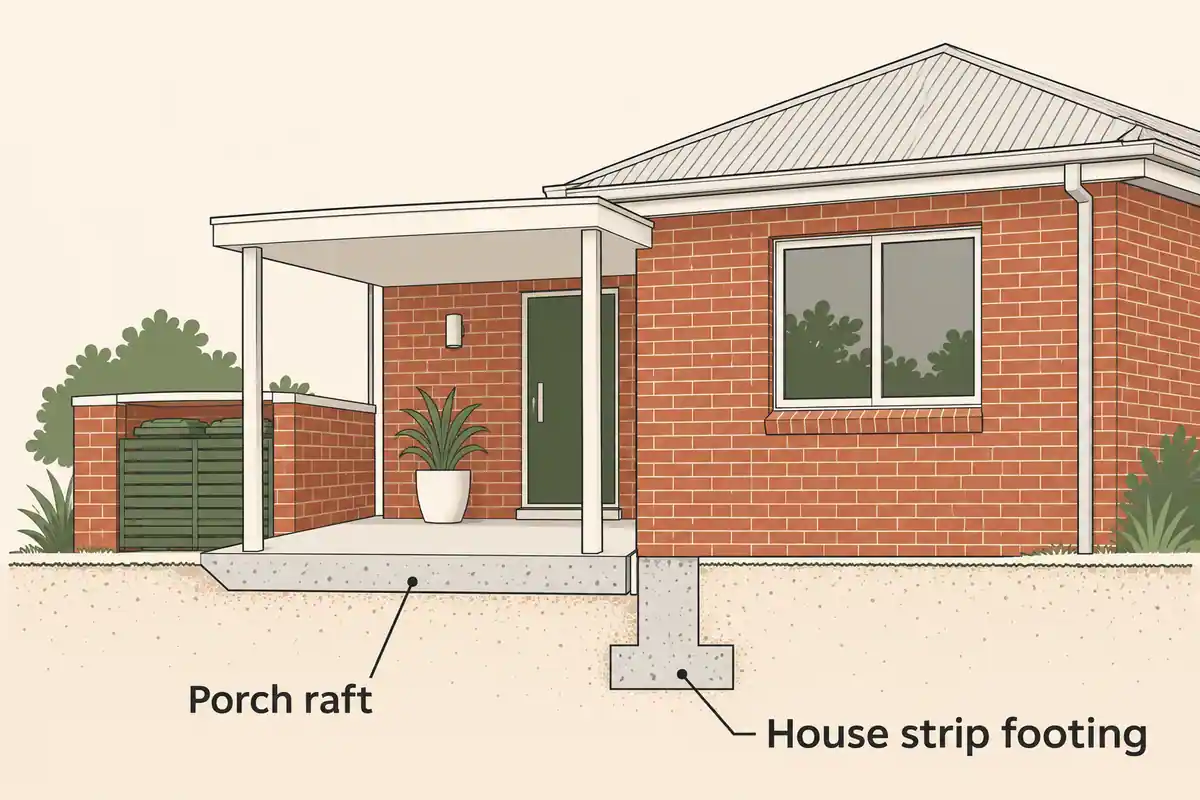
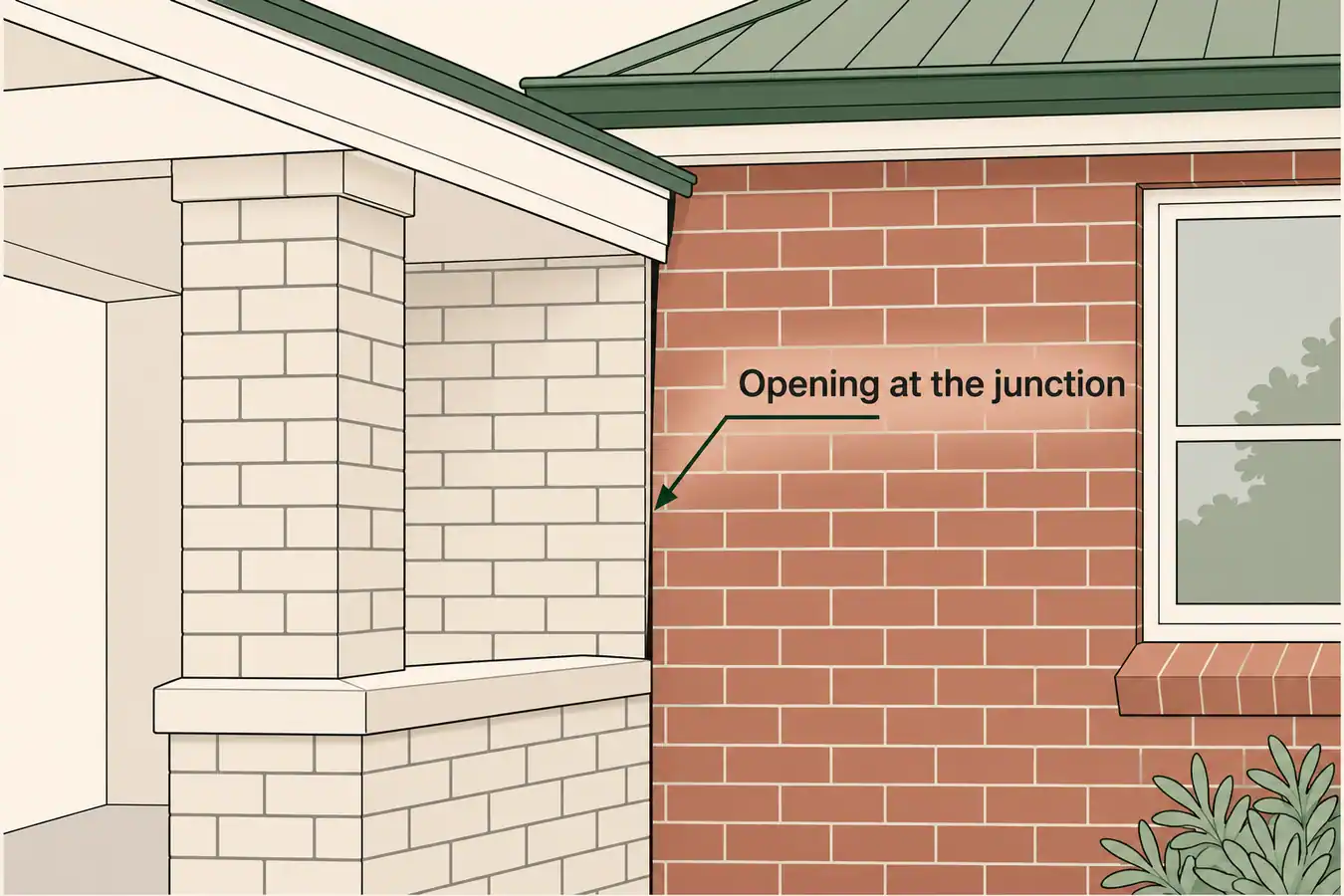
A porch and house can move by different amounts when their foundations load different areas or bear at different depths. Even modest movement can open a crack at the join. In one documented case, a porch and bin store were built on a shallow raft beside a house on strip footings. Clay shrinkage near vegetation contributed to the size of the separation. Figures 1 and 2 illustrate the footing arrangement and the opening at the junction.
What depth and load distribution each change
A strip footing carries a line of wall load into the ground along its length. A raft spreads the load from the supported part across a broader area. Those arrangements can produce different ground responses, independently of depth. On shrinkable ground, depth also matters because near-surface moisture typically varies more through the seasons than moisture further down. The fact that two foundations touch, or that their walls have the same brick finish, does not make their loads or movement equal.
Do not assume the newer footing is deeper. A new full extension can bear deeper than an older house, while a small porch raft can be shallower than the house strip footings. Both arrangements can produce a gap at the join even though the relative depths are opposite.
Figure 2 shows separation where the porch meets the front of the house, but not which side moved or in what direction. Elsewhere a crack may follow the joints or run through the units depending on the relative strength of brick and mortar. Greater opening at the top can suggest rotation; it is not a measurement of footing depth.
Drawings of the porch and house, dated construction photos or prior investigation can establish whether the two supports differ and whether they were connected. A photograph of the top of a concrete edge cannot show the full footing. Compare any drawing with what was built, especially if the porch is a later addition with records separate from the original house.
Seasonal clay shrinkage and swelling can make the joint open and close. Ground exposed to sun and rain can change more than sheltered ground beneath the building, leading to rotation as well as vertical movement. Compare the shape and position of the opening in dated views. Before interpreting a split patch as renewed building movement, check whether the underlying junction reopened or the patch failed on its own.
Porches, older bays and sheds are different cases
An older bay with shallow foundations can move relative to the house even if it was not added recently. A commercial shed on column pads beside offices on strip footings is different again: point loads and wall loads reach the ground differently. That arrangement is not a model for the porch raft. The junction reveals the difference in movement; it does not identify what caused it.
An extension can settle as the ground takes its new load. That initial adjustment is different from repeated seasonal movement. If monitoring begins just after construction, ask whether the gap is developing in one direction or cycling. The answer affects what movement any repair should accommodate.
When the junction affects more than appearance
A joint can look objectionable without affecting the use of the porch. Where the opening admits rain to the wall or its finishes, the repair also has to maintain the water-shedding detail. A rigid cosmetic patch bridging two independently moving sides can split as the opening changes. Before choosing a repair, distinguish a local finish or weathering failure from distortion extending into the wall, roof junction or door opening. Those observations concern different parts of the construction.
If a gap goes with changed door operation or distortion away from the join, include both in the assessment rather than asking only for mortar repair. Leave footing exposure to the investigation: digging alongside a shallow support can remove ground that is part of the very system being assessed.
For a purchase, ask what evidence supports the explanation. A history of seasonal reopening at a known junction is more useful than one photograph after filling. A crack that extends into other construction needs its own explanation. Distinguish a verified difference in support with a known effect from a plausible account that still relies on concealed details.