Can Pruning Prevent Subsidence? Questions to Ask Before Tree Work
Pruning can reduce the seasonal movement of shrinkable clay where a particular tree has been shown to contribute to drying and the treatment meaningfully reduces its water use. It does not reliably prevent subsidence just because a tree is close to a cracked house. The proposal must suit the tree, account for regrowth and distinguish seasonal drying from a persistent moisture deficit that could lead to swelling as the soil rewets.
What kind of pruning changes water use?
Leaves lose water to the air by transpiration, drawing water through the tree from its roots. Height alone is a poor measure of water use because leaf area, crown arrangement and the tree's response to conditions also matter. Crown reduction changes the overall size and shape of the crown. Thinning takes out selected branches but leaves much of the height and spread. The two treatments change how air moves through the foliage in different ways.
Crown thinning is not a dependable way to limit subsidence. The remaining foliage is exposed to greater airflow, so removing branches does not necessarily reduce water demand enough to affect the ground. Ask how the proposed work is expected to change water use. Whether reduction or another treatment suits the tree is an arboricultural decision; there is no universal pruning extent.
Will a smaller crown stay smaller?
A vigorous tree can respond to pruning with shoots that restore leaf area. The building is exposed to the effect over the interval between treatments, not just to the neatly reduced crown at the end of a job. If the tree regains most of its former leaf area before work is repeated, the seasonal moisture draw may again approach what the treatment was intended to reduce. An effective proposal has to consider the health of the tree, the likely regrowth and whether the treatment can be maintained.
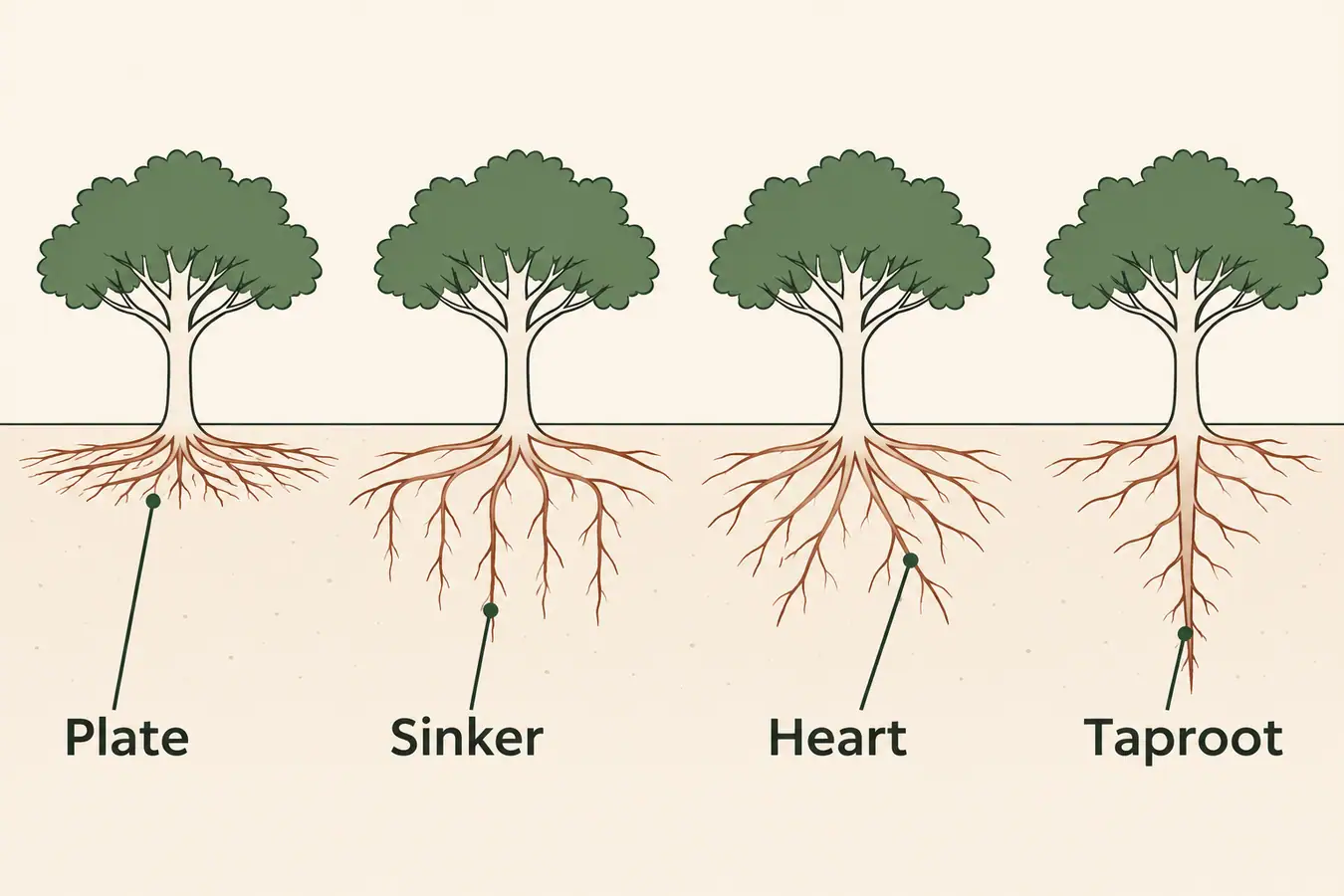
Figure 1 shows root systems ranging from shallow lateral spread to systems with deeper components. Root form depends on the interaction of the species and soil. The drawing cannot show which roots influence a particular footing or how much water they draw. An arborist assesses the tree and its response to pruning; an engineer considers whether the soil and building evidence links the tree to movement at the affected location.
When reduced drying can lead to heave
Where clay dries seasonally and substantially recovers in wetter conditions, reducing that drying can reduce the movement cycle. A deeper moisture deficit that persists through normal wetter periods is different. Reducing a tree's influence can allow water to return and the clay to swell under a footing. That recovery is not simply a smaller seasonal cycle. Do not assume pruning can be calibrated to avoid both subsidence and heave where a persistent deficit has developed.
Suppose a homeowner receives a quote to prune the nearest tree after noticing a crack at the rear corner. Before treating that as a movement remedy, check whether distortion is concentrated where the tree could influence the soil, whether the ground could shrink sufficiently and what other influences fit the timing. A damaged service at the same corner, movement in fill or a change in construction may warrant a different response. The quote can describe practical work without addressing whether that work treats the building problem.
What would count as a successful result?
Compare foundation levels before and after treatment rather than judging the result by the shape of the pruned crown. A smaller seasonal range at the affected locations can support the proposed mechanism if the comparison covers relevant conditions. A quiet period just after the work may not include the next drying season. Crack observations show how the affected wall responds, but an old break can still open or close for other reasons.
The distinction has a practical consequence for repairs: a freshly filled opening may hide the observation point before the building has been through another period of high water demand. Level marks that remain usable can provide a comparison independent of that finish.
If movement continues, check whether the treatment was carried out and maintained, whether the soil is recovering differently from what was expected, and whether another cause was underestimated. Do not extend the work to neighbouring trees by default. Pruning only makes sense as a movement measure where the particular tree, soil and building justify it.
Questions before agreeing to work
- What shows that this tree contributes to the movement at this part of the building?
- What kind of pruning is proposed, and how will the tree tolerate and respond to it?
- Can the intended effect be maintained between visits, and what is the expected regrowth?
- What movement will be checked after treatment, and when can the comparison be made?